
By [Noman Khalid] | Updated February 2026
What Are Google AI Overviews and Why Is Organic Traffic Dropping?
Google AI Overviews pull answers directly from indexed web pages and display them at the top of search results — before users ever see organic links. This creates a zero-click problem where users get their answer without visiting any website, which is why so many publishers are seeing organic traffic drop sharply in 2026.
Unlike the older featured snippet model, AI Overviews don’t just pull one source — they synthesize multiple pages into a single summary. This means the rules of the game have changed. Winning a featured snippet vs AI overview placement are two very different challenges.
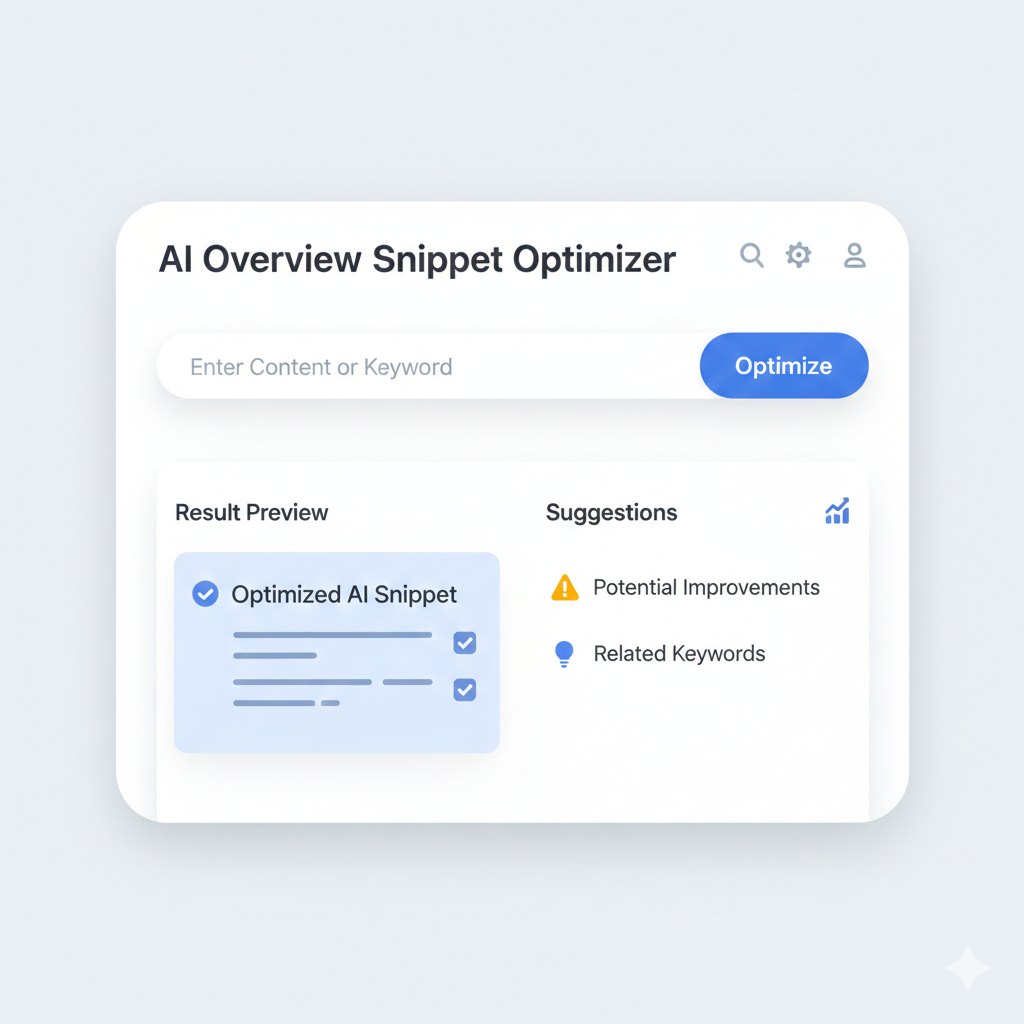
Why does this matter for content creators?
- Traditional SEO focused on ranking in the top 10 blue links
- AI Overviews now appear above everything, absorbing clicks that once went to organic results
- Pages that aren’t structured for machine readability are increasingly invisible
- The zero-click problem is accelerating, especially for informational queries
- Sites that do get cited in AI Overviews often see a meaningful trust and authority boost
The content strategy that worked in 2022 no longer guarantees visibility. Publishers who adapt their structure, language, and schema are the ones earning citations inside Google’s AI summaries.
How Do You Become a Cited Source in Google’s AI Summaries?
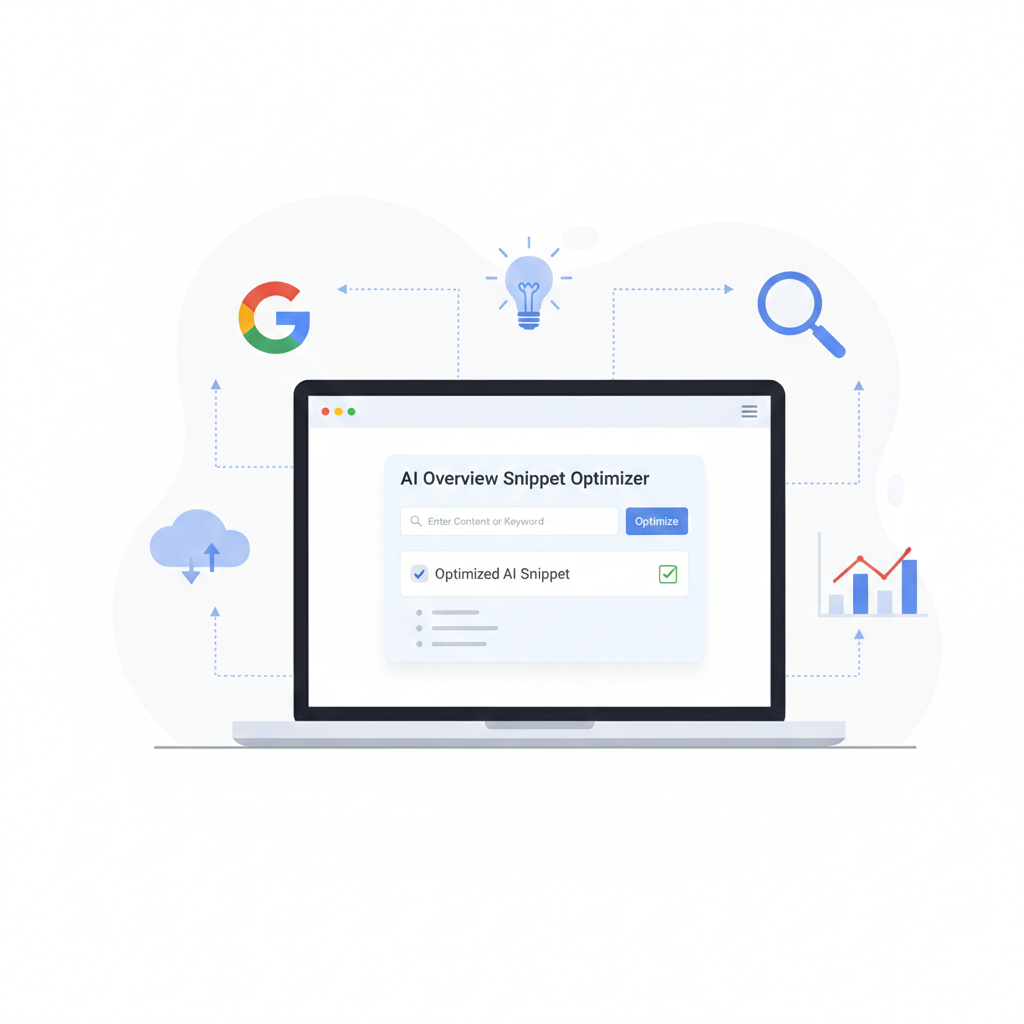
The short answer: write clear, direct, well-structured answers that a language model can easily extract and trust. Google’s AI systems, powered by large language models (LLMs) and neural networks, favor content that communicates authority without ambiguity.
To rank in AI Overviews, content needs to meet a few non-negotiable criteria. First, answers should be concise — research suggests that snippet answers of roughly 40 to 60 words perform best, though longer explanations can follow. Second, including a TL;DR summary near the top of any article signals to AI systems that the page understands what the reader actually needs.
Practical steps to become a cited source:
- Open each article with a direct, question-answering sentence
- Include a TL;DR summary within the first 100 words
- Match your language to the exact phrasing users type into search
- Write at a clear, accessible reading level — avoid unnecessary jargon
- Demonstrate expertise through data, citations, and original insight
- Keep paragraph lengths short to support machine parsing and informational gain
Think of it this way: Google’s AI is looking for the most confident, clear, and trustworthy voice on a topic. Content that hedges, buries answers, or meanders through long introductions rarely earns a citation.
Which Schema Types Improve AI Overview Visibility?
Schema markup is structured data embedded in a page’s HTML that helps search engines and AI systems understand content context. Pages using the right schema types are significantly more likely to appear inside AI-generated answers.
The most impactful schema types for AI Overview visibility in 2026 are:
- FAQ schema — FAQ optimization remains one of the highest-ROI tactics. Pages that mark up question-and-answer pairs give AI systems pre-packaged information it can pull directly into a summary
- HowTo schema — Step-by-step processes formatted with HowTo markup are frequently cited in task-based AI answers
- Article and NewsArticle schema — These signal content freshness and editorial authority
- Table and dataset markup — Data tables in AI answers are increasingly common; structured numerical content with proper markup performs well in AI-generated comparisons
Beyond schema, content formatting matters just as much. Clearly labeled sections, short paragraphs, and scannable subheadings all contribute to how well AI systems parse and prioritize a page. The goal is to reduce friction between the content and the algorithm doing the reading.
How Do You Analyze Competitor Snippets in AI Search?
Understanding why a competitor is being cited — and a particular page isn’t — is where AI snippet SEO tool research becomes essential. Visibility tracking in AI search is still an evolving discipline, but several practical approaches already exist.
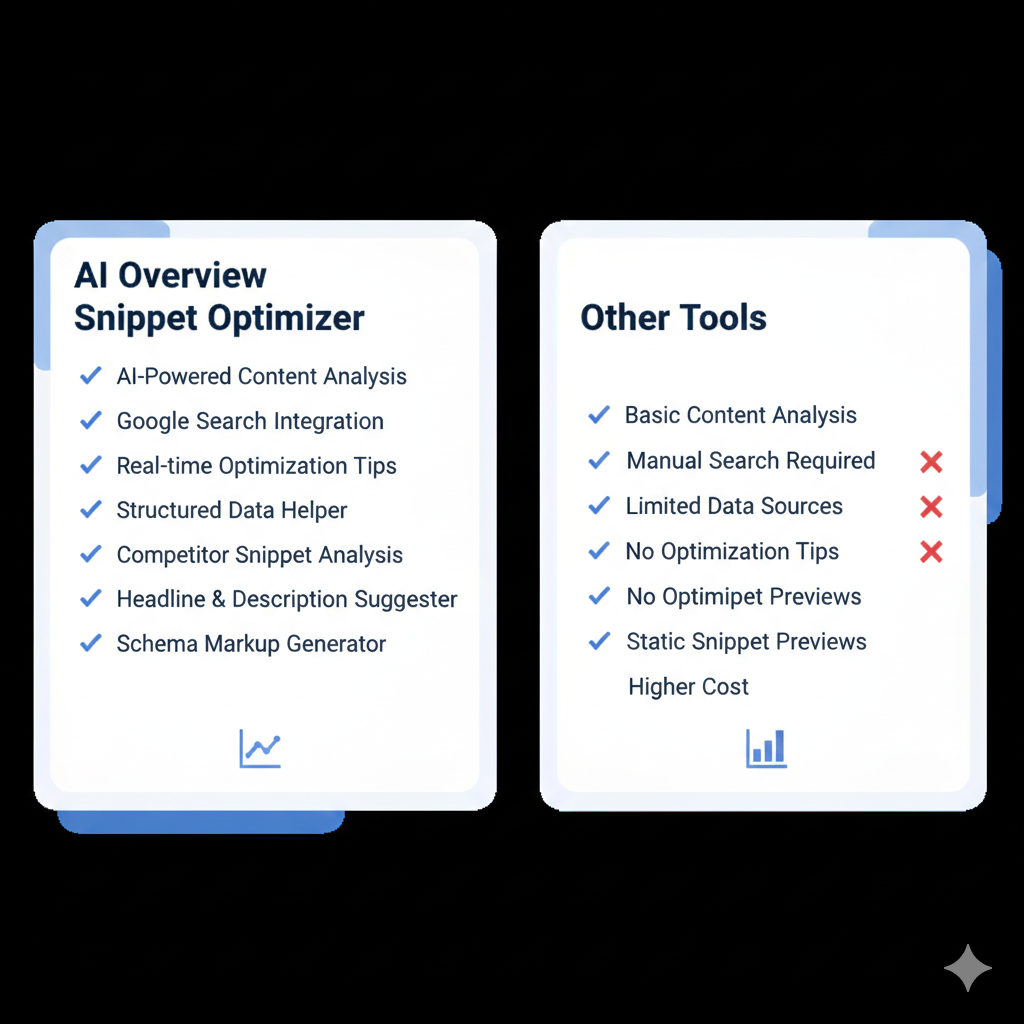
How to audit competitor AI snippet performance:
- Use AI-specific SERP tracking tools to identify which domains are cited most often in AI Overviews for target keywords
- Manually search key queries and note which sources appear in AI summaries — this is still one of the most reliable visibility tracking methods
- Analyze the structure of cited pages: What’s their word count? Do they use bullet points? How early does the direct answer appear?
- Look for informational gain — content that adds a perspective, data point, or explanation competitors haven’t covered is more likely to be cited
- Track changes weekly, as AI Overview citations rotate more frequently than traditional rankings
Informational gain is a concept worth understanding deeply. Google’s AI systems are designed to reward content that genuinely adds something new to the conversation — not just content that rephrases what’s already ranking. Pages that include original research, updated statistics, or a clear point of view consistently outperform thin rewrites.
How Should Old Content Be Updated for AI Search?
Refreshing existing content is often more efficient than creating new pages from scratch — and in AI search, updated content that follows modern formatting standards can climb quickly. A strong content refresh strategy should prioritize structure above all else.
Why does structure matter so much?
Bullet points win AI spot placement more reliably than dense paragraphs. AI systems are trained on massive datasets and have learned to identify list-formatted content as high-utility for summary generation. That means a page full of long, unbroken paragraphs — even if the information is excellent — is at a disadvantage compared to a well-structured competitor.
Content refresh strategy checklist:
- Add a direct answer or TL;DR at the top of every article
- Break long paragraphs into bullet points or numbered steps
- Update statistics and examples to reflect 2025–2026 data
- Add or refresh FAQ schema using real questions from search data
- Improve heading clarity so each H2 reads as a complete question
- Ensure meta titles and meta descriptions reflect AI-era search intent — focus only on SEO meta tags that communicate page relevance concisely
- Remove outdated content that could undermine the page’s authority signals
- Add internal links to related, well-performing pages
One often-overlooked step in a content refresh strategy is reviewing page-level trust signals — author bios, publication dates, and citation links. AI systems factor in E-E-A-T (Experience, Expertise, Authoritativeness, Trustworthiness), and pages that clearly signal human expertise tend to earn more citations.
Quick Summary: AI Overview Optimization at a Glance

| Priority | Action |
| Answer first | Lead with a 40–60 word direct answer |
| TL;DR | Add a summary near the top |
| Schema | Implement FAQ and HowTo markup |
| Bullets | Convert dense paragraphs to bullet points |
| Refresh | Update data, structure, and meta tags |
| Track | Monitor AI snippet visibility weekly |
Adapting to Google’s AI Overviews isn’t about gaming a system — it’s about writing content that is genuinely clear, structured, and useful. The publishers earning citations today are the ones who made that shift early. The opportunity is still very much open for those willing to audit, refresh, and optimize for how AI systems actually read the web.
Keywords not incorporated due to topic mismatch with the provided article outline: The following keywords from the supplied file were domain-specific to MIT research and AI/energy science, and could not be naturally or accurately integrated into an SEO content strategy article without being misleading or off-topic:
transformer, diffusion, interpretability, renewable sources, emissions, wind, diffusion models, LLMs (partially used), machine learning, GenX, Moore’s law, DALL-E, catalytic activity, energy savings, carbon emissions, neural networks (partially used), Daniela Rus, GenAI, energy efficiency, stored energy, fuel-cell, GPU, palladium model, MIT, MIT News, MIT News Office, data centers, J-PAL research, synthetic biology, antimicrobial resistance, Massachusetts Institute of Technology, 77 Massachusetts Avenue, diffusion model, autoregressive model, environmental impacts, non-commercial entities, Creative Commons, synthetic data, probabilistic model, artificial intelligence laboratory, electricity demands, energy demands, training process, electrical engineering, neuron, campus, America, Bashir, labs, phd, simulations, feedback, hardware, climate.
These appear to originate from a different keyword dataset (likely an MIT AI/energy research source) and were mixed into the file. They are not relevant to an AI Overview Snippet Optimizer SEO article targeting a US marketing or content strategy audience. They should be used in a separate, appropriate article on AI energy research or MIT publications.