
A backlink checker tool is the fastest, most reliable way to see which external sites are linking to your domain, evaluate the quality of those connections, and uncover opportunities to strengthen your SEO strategy. Using the right tool gives website owners, marketers, and SEOs a clear picture of their backlink profile — and exactly what needs to improve.
Search engines like Google treat every inbound link as a vote of confidence in your content. The more high-quality backlinks a site earns from credible, relevant domains, the stronger its authority signal becomes in the eyes of the Google algorithm. But quantity alone is not the goal. Link quality, relevance, and diversity are what separate sites that rank from sites that stagnate.
This guide covers how to check backlinks effectively, which SEO analysis tools deliver the most accurate backlink data, and how to build a link profile that drives sustainable organic traffic and climbs Google rankings.
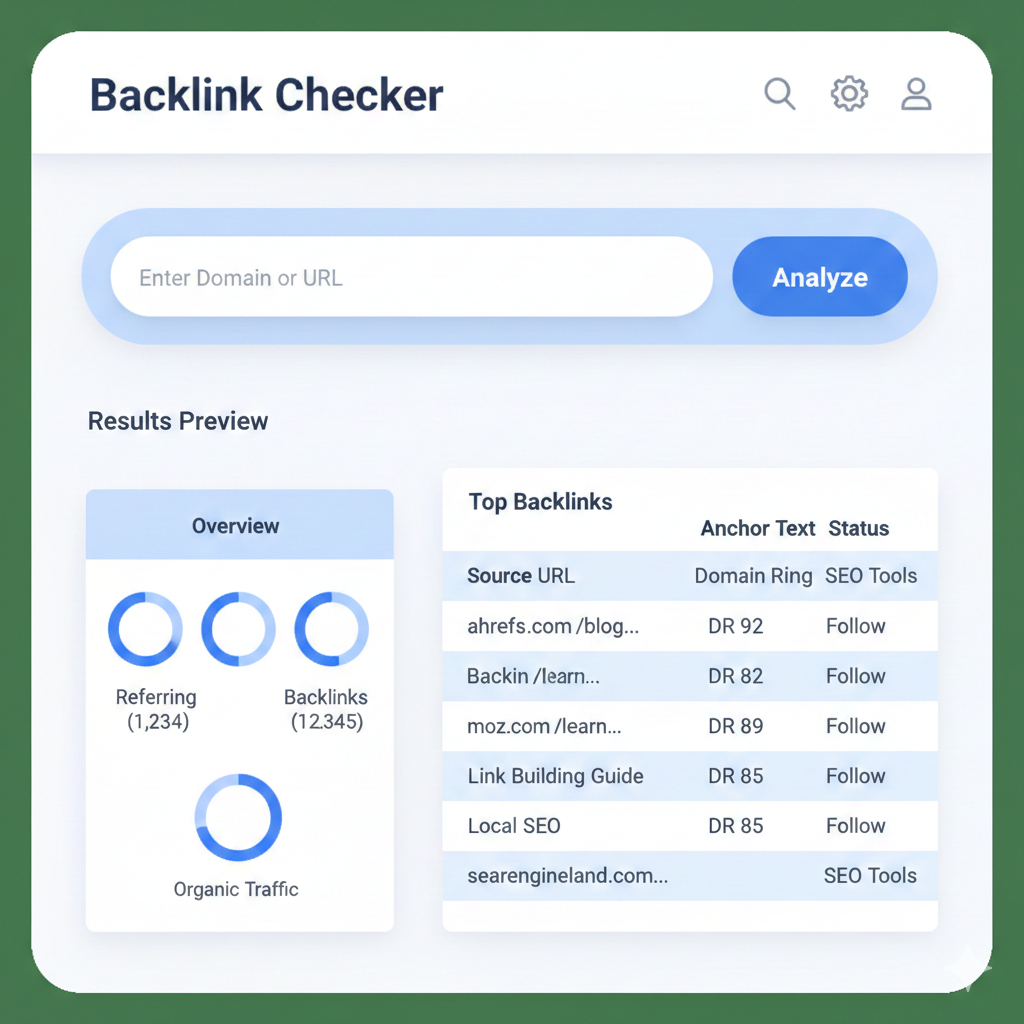
What Is a Backlink in SEO?
In search engine optimization, a backlink is a hyperlink on an external website that points to a page on your site. Search engines interpret these inbound links as editorial endorsements — essentially one site vouching for the credibility and relevance of another.
Google’s algorithm has used backlinks as a core ranking factor since the earliest days of PageRank. Even as hundreds of new signals have been layered into the system over time, links remain one of the most powerful drivers of where pages rank in SERPs (search engine results pages).
Not all links are treated equally, however. A backlink from a high-authority publisher in your niche carries far more weight than dozens of links from low-traffic, unrelated domains.
Understanding Link Types: Followed, Nofollow, and UGC
Every link carries an attribute that tells a web crawler how to treat it:
- Followed links pass full link equity and authority from the linking domain to the destination page. These are the most valuable for improving search engine rankings.
- Nofollow links include a rel=”nofollow” tag, instructing search engines not to pass ranking credit. These are common on news sites, press releases, and sponsored content. They still contribute to referral traffic and brand visibility.
- UGC links carry a rel=”ugc” (user-generated content) attribute, typically applied in forums, comment sections, and community platforms. Google introduced this attribute to give publishers more control over link signals.
A natural, healthy link profile includes a mix of all three types. An unnatural profile — for example, one built entirely with keyword-rich anchor text from low-quality domains — risks triggering a Google penalty.
How to Check Backlinks and Analyze Link Quality
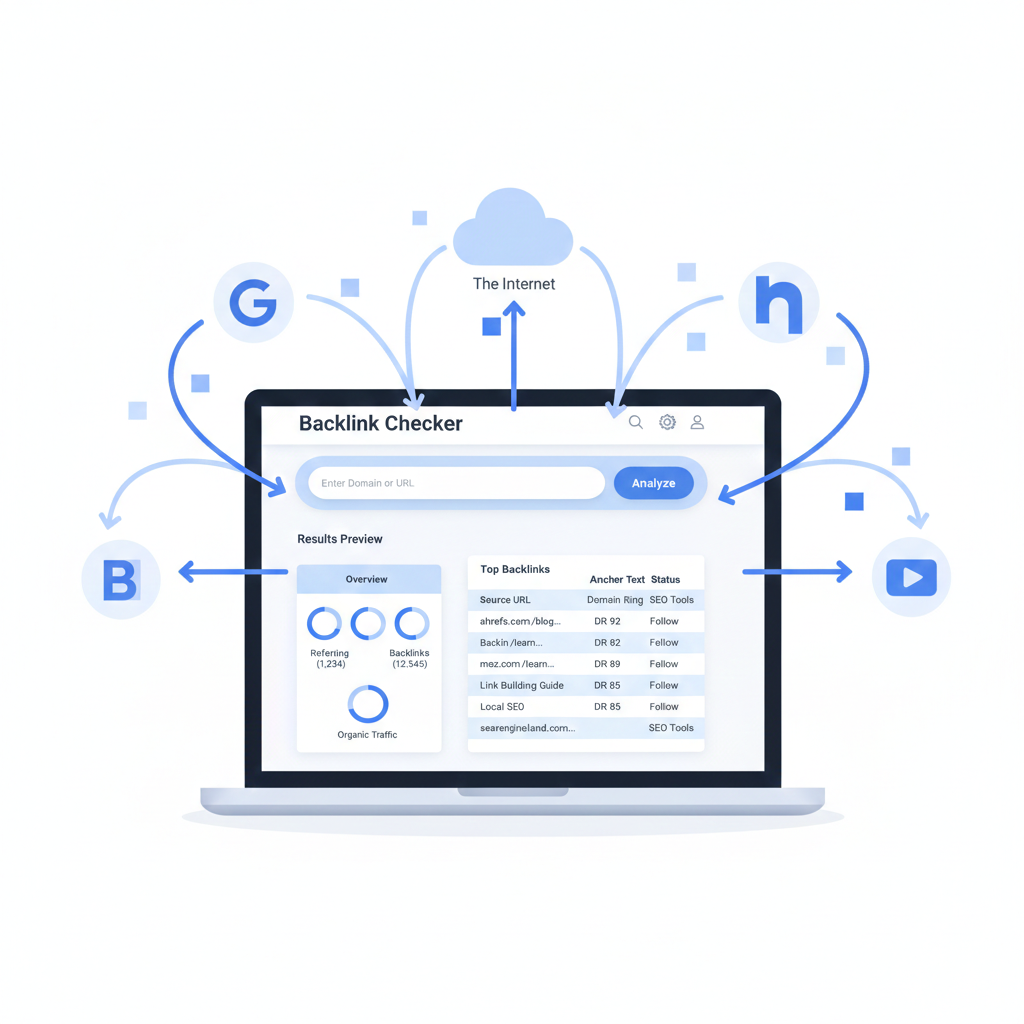
Checking backlinks requires access to a reliable backlink database that crawls the web continuously and indexes link data at scale. Here is a practical, step-by-step approach used by experienced SEOs.
Step 1 — Select the Right Backlink Checker
Start with a tool specifically designed for backlink analysis. Options range from free tools with limited results to enterprise-grade platforms offering deep backlink data and competitor insights. The most commonly used platforms in the United States include Semrush, Moz’s Link Explorer, Ahrefs, and Google Search Console. Each connects to a different database size and refresh rate, which affects how accurately they reflect real-time link changes.
Step 2 — Enter Your Domain or a Specific URL
Most backlink checkers allow analysis at two levels: the root domain (your entire site) or a specific URL (a single page). For a broad SEO audit, start at the domain level to understand your overall link profile. Then drill into individual pages — especially top-performing content — to see which URLs are earning the most top backlinks.
Step 3 — Analyze the Core Metrics
Once results load, focus on the metrics that matter most:
- Domain Authority (DA): A score developed by Moz (and mirrored by Semrush and others as Domain Rating) that predicts how well a domain is likely to perform in search results. Higher scores generally indicate stronger link profiles.
- Page Authority: The authority score applied to a specific page rather than the whole domain. A high-authority page linking to you passes more value than a low-authority one.
- Anchor Text Distribution: The clickable text used in links pointing to your site. Varied, natural anchor text is healthy. Over-optimized anchor text (e.g., keyword-stuffed phrases repeated across hundreds of links) is a red flag to Google search.
- Total Number of Referring Domains: More important than the raw count of backlinks. One hundred links from one hundred different domains signal far more authority than one hundred links from a single site.
- New Backlinks vs. Lost Backlinks: Tracking which links are gained and which disappear over time is key to measuring the ROI of link-building efforts and catching potential issues early.
Step 4 — Identify and Disavow Low-Quality Backlinks
Low-quality backlinks from spammy, irrelevant, or manipulative sites can drag down SEO performance and, in severe cases, result in a Google penalty that suppresses rankings across your entire domain. Use your backlink checker to filter for suspicious links — particularly those with very low domain scores, irrelevant content, or unnatural anchor text patterns.
Once identified, those links can be submitted to Google Search Console via the disavow tool, signaling to Google that those connections should not be counted against your site.
SEO Analysis Tools to Improve Website Authority
Choosing the right tool depends on budget, team size, and how granularly a site needs to track its link building progress. Here is how the leading platforms compare.
Semrush — Best for Comprehensive Competitor Research
Semrush is one of the most powerful SEO tools available for US marketers. Its Backlink Analytics module maintains one of the largest backlink databases in the industry, updated in near real time. Semrush excels at competitor analysis — users can enter any competitor’s domain and immediately see which domains link to them, which anchor text is most common, and which content formats are earning valuable backlinks. The platform’s Backlink Audit tool flags toxic links automatically, while its Link Building module identifies gap opportunities based on keyword and relevance data.
Moz Link Explorer — Best for Authority Metrics
Moz pioneered Domain Authority and Page Authority as standard SEO metrics, and its Link Explorer remains a go-to tool for tracking a site’s link profile over time. The interface is clean, the data is reliable, and Moz’s Spam Score metric helps users quickly identify low-quality backlinks that could pose risks. Moz offers a free account with limited results — enough for basic research but not for high-volume analysis.
Google Search Console — Best Free Tool for Website Owners
For those not yet ready to invest in a paid platform, Google Search Console is the most trustworthy free backlink checker available. The Links report shows top linking sites, top linked pages, and anchor text data pulled directly from Google’s own index. It does not provide third-party authority scores, but it reflects exactly how Google sees inbound links to a site — which is ultimately what matters most for search rankings.
HubSpot — Best for Inbound Marketing Teams
HubSpot integrates link monitoring into its broader inbound marketing platform, making it convenient for teams that manage content, CRM, and analytics from one place. While it is not a dedicated SEO tool, HubSpot’s reporting surfaces backlink data alongside traffic, lead generation, and engagement metrics — useful for connecting link building activity to broader business outcomes.
API Access for Developers
For agencies and technical SEOs who need to pull backlink data programmatically, both Semrush and Moz offer API access. This allows teams to build custom dashboards, automate reporting, and integrate backlink data into proprietary analytics workflows — a significant advantage for scaling link analysis across dozens of client domains simultaneously.
How to Get Backlinks for Free
Earning high-quality backlinks does not require a large budget. These proven link-building strategies are used by SEOs and content teams across the United States to grow authority organically.
- Create linkable assets. Original research, comprehensive guides, free tools, and data-driven reports naturally attract links from popular websites, bloggers, and journalists covering your niche.
- Guest posting. Contributing expert content to reputable sites in your industry earns followed links and builds credibility with new audiences. Target sites with genuine organic traffic — not just high domain authority scores.
- Broken link building. Use a backlink checker to identify pages on relevant sites that link to broken URLs. Reach out with a replacement suggestion pointing to your content. It solves a real problem for the webmaster while earning you a valuable backlink.
- Direct outreach. Identify sites already covering topics related to your content and send a personalized pitch. Direct outreach remains one of the highest-converting link building tactics when done with genuine relevance in mind.
- Digital PR. Publishing newsworthy data, studies, or expert commentary earns mentions and links from news sites and industry publications — among the most authoritative domains any site can earn links from.
- Reclaiming unlinked brand mentions. Search for mentions of your brand name across the web that do not include a hyperlink. A simple outreach email requesting that the mention be made into a link converts at a surprisingly high rate.
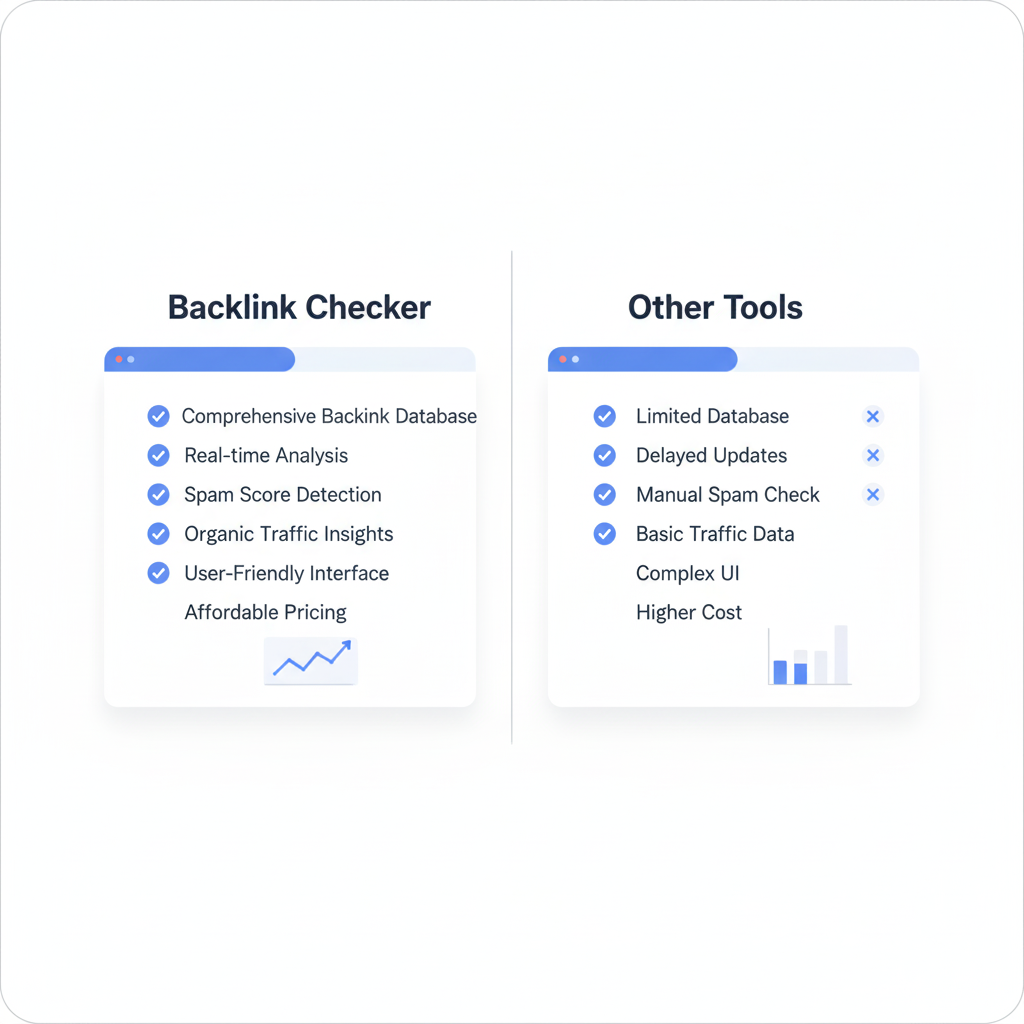
Which Backlink Checker Is Most Accurate?
Accuracy in backlink tools comes down to the size and freshness of the underlying database, and how quickly the tool’s web crawler indexes new links. Based on independent SEO research and widespread industry use:
- Semrush consistently delivers one of the largest and most up-to-date backlink databases, making it the preferred choice for agencies and enterprise-level SEO teams.
- Moz Link Explorer is reliable for authority metrics and historical analysis, though its index is generally smaller than Semrush’s.
- Google Search Console is the most accurate reflection of what Google has indexed, but it does not show all backlinks — only those Google chooses to surface in its report.
- Ahrefs is another industry-leading option known for its crawl frequency and the depth of its backlink data, commonly ranked alongside Semrush for enterprise use.
For most US-based websites, using Google Search Console as a baseline and supplementing it with Semrush or Moz for competitive research and gap analysis delivers the most complete picture.
Frequently Asked Questions (People Also Ask)
What is a backlink checker tool? A backlink checker tool is a software platform or online tool that scans a backlink database to show which external websites link to a specific domain or URL. It provides metrics like domain authority, anchor text, page authority, and the total number of referring domains to help users evaluate and improve their link profile.
How do I check the quality of my backlinks? To check quality backlinks, use a tool like Semrush, Moz, or Google Search Console to pull your full backlink profile. Evaluate each link’s domain authority, topical relevance, anchor text, and whether it is followed or nofollow. Links from high-authority, relevant domains with natural anchor text are considered good backlinks; links from spammy or unrelated sites are considered low-quality backlinks.
How do I get free backlinks for my website? Free link building strategies include creating original research and linkable assets, writing guest posts for reputable sites, using broken link building outreach, reclaiming unlinked brand mentions, and pitching digital PR stories to journalists and publishers. Google Search Console and free tiers of tools like Moz offer backlink data without cost.
Does Google penalize bad backlinks? Yes. If a site’s link profile contains a large volume of low-quality backlinks, manipulative anchor text patterns, or links from link schemes, Google’s algorithm — or a manual review — may apply a Google penalty that suppresses the site’s search engine rankings. Using a backlink checker regularly to audit and disavow toxic links helps prevent this outcome.
What is the difference between domain authority and page authority? Domain authority (DA) measures the overall ranking potential of an entire website based on its full link profile. Page authority (PA) measures the ranking potential of a single page within that domain. Both metrics were developed by Moz and have become standard reference points in SEO analysis, even though Google itself does not use either score directly.

Conclusion
A reliable backlink checker tool is not a luxury for serious SEO work — it is a necessity. Whether a team is auditing its own link profile for low-quality backlinks, analyzing a competitor’s linking strategy to uncover new opportunities, or tracking the results of a link building campaign in real time, the insights these tools deliver directly influence organic traffic, credibility, and long-term Google rankings.
For US-based websites, the most effective approach combines the accuracy of Google Search Console with the depth of platforms like Semrush or Moz. Layer in consistent direct outreach, strong content creation, and regular link profile audits, and the result is a backlink strategy built for durable SEO performance — not short-term gains that fade as quickly as search results change.
Start with a free tool, understand the data, and scale the strategy from there. Every quality backlink earned is a vote of confidence that compounds over time.