
What Is Domain Authority and Why Does It Matter for SEO?
Domain authority is a search engine ranking metric developed by Moz that predicts how likely a website is to rank in search engine results pages (SERPs). It scores websites on a scale from 1 to 100 — the higher the score, the stronger the ranking potential.
Understanding domain authority is essential for any serious SEO strategy in 2024. Whether someone is running a small blog or managing an enterprise-level website, this metric gives a clear picture of where a site stands compared to its competitors.
But here’s what most people get wrong — domain authority is not a metric used directly by Google. It’s a third-party score created by Moz, used by SEOs to benchmark a site’s overall link profile strength and credibility.
What Exactly Is Domain Authority?
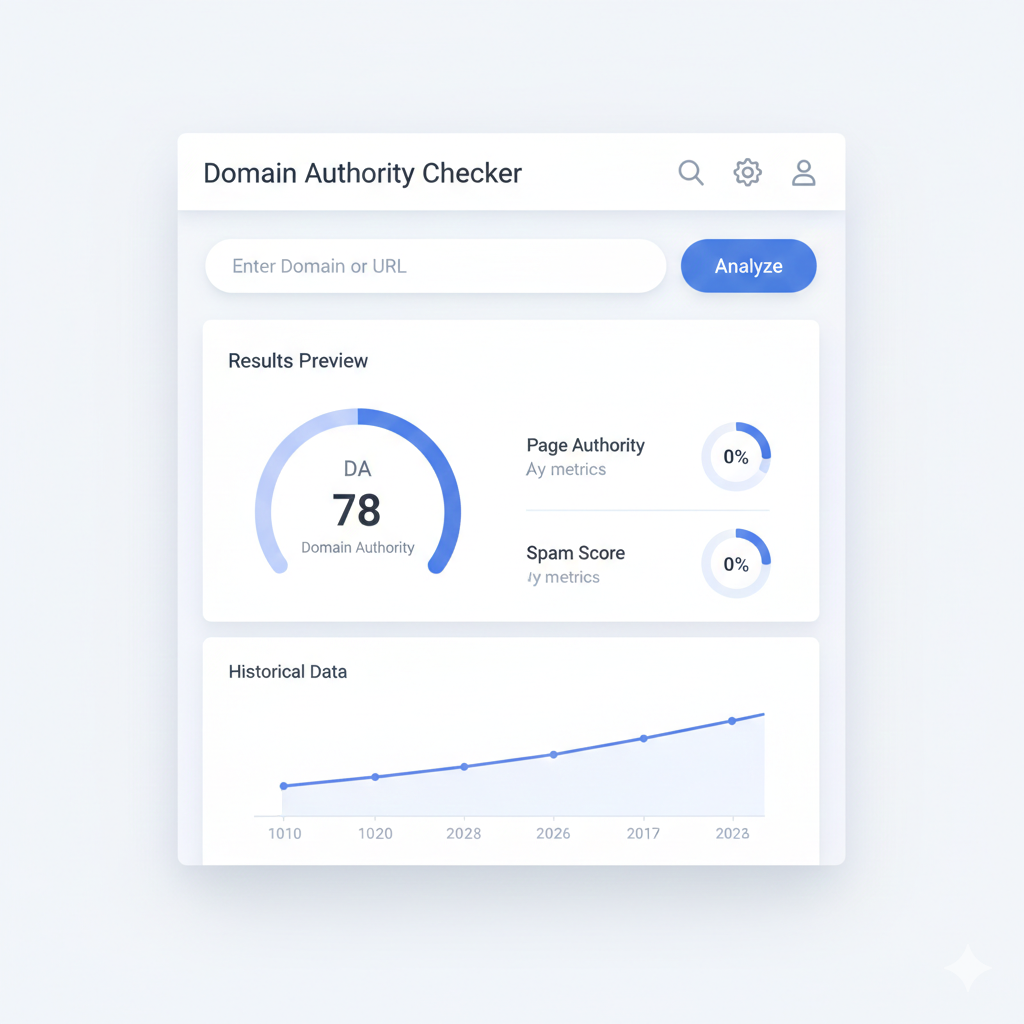
Domain authority (DA) is calculated using a logarithmic scale, which means moving from a score of 20 to 30 is far easier than moving from 70 to 80. The score is based on multiple factors, with the most important being the quality and quantity of external backlinks pointing to a domain.
Moz developed this metric as part of its authority checker toolset, and it’s widely used across the SEO industry. Other tools have created similar metrics — Ahrefs uses Domain Rating (DR), and Semrush tracks what it calls the Authority Score. While these tools use slightly different methodologies, they all measure roughly the same thing: how authoritative and trustworthy a domain appears based on its backlink profile.
A new domain typically starts with a DA of 1. Over time, as the site earns quality backlinks, publishes strong content, and builds topical depth, the score rises. Domain age also plays a role — an old domain that has been consistently building links tends to outperform a new domain with the same number of backlinks.
Is Domain Authority Important for SEO?
This is one of the most common questions SEOs ask. The direct answer is: DA is not a Google ranking factor, but it is a reliable proxy for measuring SEO strength.
Here’s why it still matters:
- Competitor benchmarking — DA helps compare a site’s strength against competitors in the same niche.
- Link building prospecting — When identifying link prospects, DA helps filter out low-quality or spam-heavy sites.
- Tracking SEO performance — Regular monitoring of DA score shows whether link-building efforts are paying off.
- Predicting organic traffic potential — Sites with higher DA scores generally attract more organic traffic from search results.
Google uses its own internal version of link evaluation through the PageRank algorithm. While the PageRank system isn’t publicly visible the way DA is, the underlying principle is similar — links from authoritative, relevant sites carry more weight.
It’s also important to watch spam score alongside DA. A site can have a decent DA but a high spam score, which signals toxic backlinks and potential Google penalties. Keeping both metrics in check is part of a healthy SEO strategy.

Is a Domain Authority Score of 20 Good?
A DA of 20 is on the lower end of the scale, but that doesn’t mean it’s worthless — especially for a new domain. Context is everything.
Here’s a general breakdown:
- 1–20: New or low-authority sites. Common for new domains or those with minimal backlinks.
- 21–40: Developing authority. The site is building a backlink profile and gaining some visibility.
- 41–60: Moderate authority. The site competes well for mid-range keywords.
- 61–80: High authority. Strong backlink profile and consistent search engine ranking presence.
- 81–100: Industry leaders. Think major news publications, Wikipedia, government sites.
So, is 20 domain authority good? For a brand-new site that launched six months ago — yes, it’s a reasonable start. For a business that has been publishing content for three years — it signals that link building and content quality need serious attention.
What matters more than chasing a high score is comparing DA against direct competitors. If the top-ranking sites for a target keyword have a DA of 35, then a site with a DA of 30 can absolutely compete — and winning depends more on content quality, on-page SEO, and user experience than raw numbers.
How Can You Find DA and PA Using a Domain Authority Checker?
Finding domain authority and page authority (PA) is straightforward with the right tools.
Moz Free Tool — The free domain authority checker on Moz’s website allows users to check DA and PA for any URL instantly. The Moz API also gives developers access to these metrics at scale.
Ahrefs — Ahrefs shows Domain Rating (DR) as its equivalent metric, alongside detailed backlink profile data.
Semrush Authority Score — Semrush tracks authority scores as part of its site audit and competitor analysis features.
Bulk DA Checkers — Several free tools online allow checking multiple domains at once, which is useful when analyzing link prospects or comparing unique domains in a niche.
Page authority works on the same scale as domain authority but applies to individual pages rather than the entire domain. Both metrics matter — a high DA site with strong PA on specific pages tends to dominate search results for competitive keywords.
How to Increase Domain Authority? Proven Strategies That Actually Work
Improving DA takes time, consistency, and a clear SEO strategy. Here are the most effective ways to move the needle.
What Kind of Backlinks Actually Increase Domain Authority?
The single biggest factor in increasing DA is earning high-quality backlinks from authoritative, relevant sites. A single backlink from a site with DA 80 is worth more than fifty links from DA 10 sites.
Effective link-building tactics include:
- Guest posting on reputable industry blogs
- Digital PR — creating data-driven content that earns press coverage
- Resource link building — getting listed on curated resource pages
- Broken link building — finding broken links on high-authority sites and offering replacement content
Does Internal Linking Help Improve DA Score?
Yes — and it’s one of the most underrated tactics. Internal linking distributes authority across the site. Linking relevant pages together helps search engines understand the site’s structure and boosts individual page authority across key URLs.
Should You Remove Toxic Backlinks to Protect Your DA?
Absolutely. A backlink profile filled with spammy or irrelevant links can drag down DA and trigger webspam detection. Regular audits using Semrush or Ahrefs help identify toxic links. The Google Disavow Tool can then be used to remove their influence.
What Type of Content Earns the Most Natural Backlinks?
Content that ranks doesn’t just target keywords — it provides genuine value that other sites want to reference. Long-form guides, original research, free tools, and visuals like infographics all attract natural links over time and strengthen the overall link profile.
How Does On-Page SEO Affect Domain Authority?
Strong on-page SEO ensures that search engines can crawl, index, and understand content properly. This includes optimizing title tags, headers, meta descriptions, URL structure, and image alt text — all of which contribute to overall SEO performance and authority scores over time.
Does User Experience Play a Role in Building Domain Authority?
Google increasingly rewards sites that deliver a strong user experience — fast load times, mobile optimization, clear navigation, and low bounce rates. These signals reinforce domain credibility in the eyes of search engines and support long-term ranking potential.
Frequently Asked Questions (FAQs)
What is a good domain authority score for a new website? For a new domain, a DA between 10 and 20 within the first year is considered normal. The focus should be on building quality backlinks and publishing strong content rather than fixating on the number.
How long does it take to increase domain authority? DA increases gradually over time. Most sites see meaningful improvements within 6 to 12 months of consistent link building and content creation. Domain age also influences how quickly scores grow.
Does domain authority directly affect Google rankings? No — DA is not a Google ranking factor. However, the same activities that increase DA (quality backlinks, strong content, good user experience) are the same things that improve rankings in search results.
What is the difference between domain authority and domain rating? Domain authority is a metric from Moz, while domain rating is Ahrefs’ version of the same concept. Both measure backlink strength, but they use different algorithms and data sources.
Can DA drop even if nothing wrong is being done? Yes. DA is a relative metric, meaning if competitors build links faster, a site’s score can drop even without losing any backlinks. Regular monitoring helps catch these shifts early.
Conclusion
Domain authority is one of the most useful metrics in an SEO toolkit — not because it directly influences Google rankings, but because it reflects the overall health, credibility, and link-building strength of a website. Tracking DA alongside page authority, spam score, and organic traffic gives a well-rounded picture of SEO success.
The path to a higher DA score runs through the same fundamentals that have always driven SEO: earning quality backlinks, creating content worth linking to, maintaining a clean link profile, and delivering a strong user experience. There are no shortcuts on a logarithmic scale — but with consistent effort, the results are lasting.